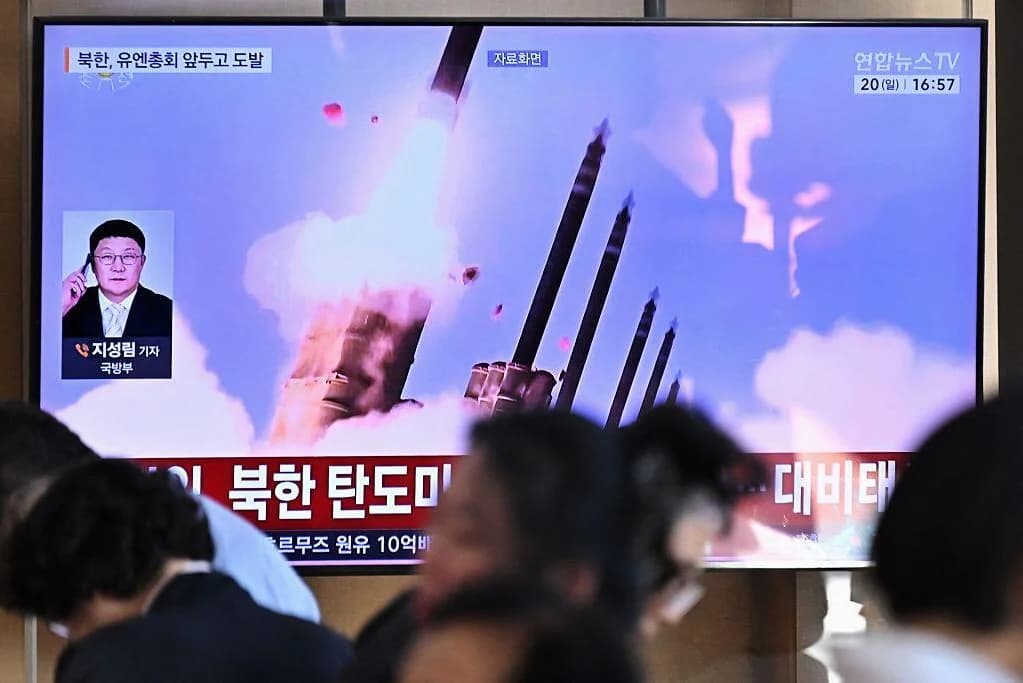
Pyongyang reports new weapons test
North Korea has announced another weapons test, placing renewed focus on the country's military development programme and the security calculations of neighbouring South Korea and Japan.
North Korean state media said the country successfully tested a new combat weapon system on Sunday, according to Reuters. The announcement was reported on 22 September.
Pyongyang presented the system as incorporating advanced defence technology. Independent assessments of North Korean weapons claims can take time because detailed technical information released by the country is often limited.
The latest announcement nevertheless adds to a long-running programme through which North Korea has developed missiles and other military capabilities.
Regional governments watching developments
Any significant North Korean weapons test attracts close attention in Seoul, Tokyo and Washington because of the country's existing ballistic-missile and nuclear programmes.
South Korea and Japan maintain sophisticated surveillance and missile-warning capabilities, while the United States maintains military forces and security alliances in the region.
The strategic significance of the latest system will depend on factors including its range, accuracy, survivability, deployment method and intended battlefield role.
Those details may become clearer as governments analyse available intelligence and any additional material released by North Korea.
Broader security implications
North Korea's weapons development has been the subject of United Nations sanctions and years of international diplomatic efforts.
Negotiations over Pyongyang's nuclear programme have repeatedly encountered major disagreements over sanctions relief, security guarantees and the steps required for denuclearisation.
The latest development comes at a time when global attention is divided among multiple security challenges, including conflicts in Europe and the Middle East and intensifying competition between major powers.
For Northeast Asia, however, North Korea's military capabilities remain a persistent security issue.
Future responses could include diplomatic statements, additional military monitoring and consultations among the United States, South Korea and Japan.
Analysts and governments will now examine whether the latest test represents a genuinely new capability, an improvement to an existing system or another stage in a longer development programme.
Further information from regional governments will be important for independently assessing North Korea's claims and determining the operational significance of the test. Air travel can also face disruption when powerful winds, reduced visibility and heavy rainfall affect airports or flight paths.
Emergency services typically focus on identifying communities exposed to flooding and slope failure while authorities issue warnings as weather conditions develop.
Residents in vulnerable areas are advised to follow official evacuation instructions and avoid flooded roads, rivers and unstable slopes.
Climate and disaster preparedness
Japan has extensive experience managing earthquakes, typhoons, floods and landslides, supported by sophisticated early-warning and disaster-response systems. However, extremely heavy rainfall can still overwhelm drainage networks and destabilise terrain.
The latest storm highlights the continuing importance of resilient infrastructure as countries across Asia confront severe weather events.
The full scale of damage may take time to establish because emergency teams must first reach affected communities and inspect transport links, homes, power infrastructure and other facilities.
Authorities are expected to continue monitoring rainfall levels and landslide risks while determining whether additional evacuations or emergency measures are necessary.